
Puddle Precautions

There’s a lot to be said for a vigorous walk with your dog after a rainstorm. The landscape is refreshed, the air smells great, and you and your dog get to unleash some cabin fever!
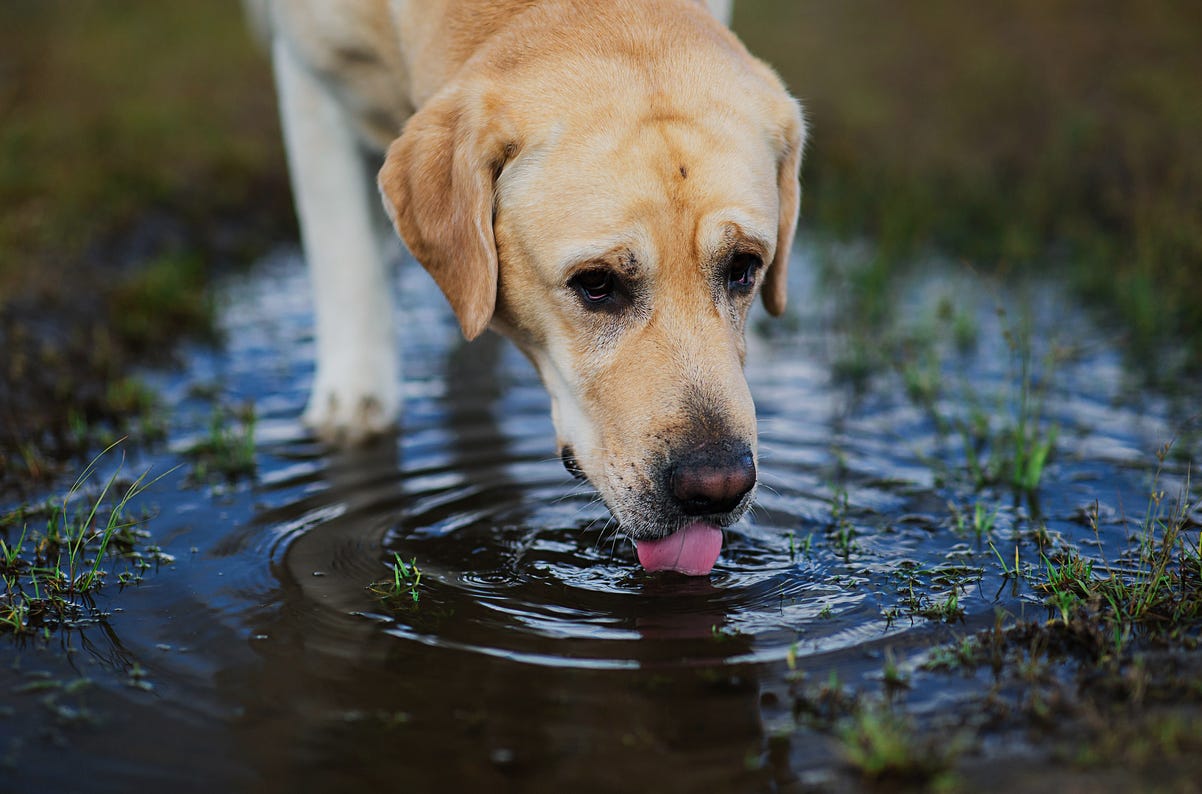
As fun as it is to watch your dog splash and play in the puddles you encounter, caution is advised. Depending on the surrounding environment, those pools of standing water can harbor health hazards.
Leptospirosis
Leptospirosis organisms are bacteria that thrive in wet climates. Wild animals—rodents in particular—and some domesticated animals (cows, sheep, pigs) can carry leptospirosis and shed the organism in their urine. Even though they’re infected, these mammals maintain good health. Unfortunately, not true for dogs.
Dogs can contract leptospirosis by drinking from water sources contaminated with urine from an infected animal. Puddles that form from rain runoff qualify as such a source. Infection can also occur from eating an animal carrying the disease. How many of us have had dogs that readily gobble down the rodents they catch?
Not all dogs exposed to leptospirosis get sick, but for those that do, kidney failure often occurs. Associated symptoms include lethargy, vomiting, diarrhea, and loss of appetite. The liver and lungs are also targets for this disease.
Blood and urine tests are used to diagnose leptospirosis. Success of treatment with antibiotics and intravenous fluids relies on catching the diagnosis early.
The American College of Veterinary Internal Medicine consensus statement reads as follows: “All dogs are at risk of leptospirosis, regardless of signalment, geographic location, lifestyle, and the time of year.”
The leptospirosis vaccine is effective and reliable. Be sure to discuss it with your veterinarian.
Giardia
Giardia organisms are microscopic protozoa that live within the intestinal tract of a variety of domesticated and wild animals. The infectious (contagious) forms shed in the feces readily contaminate water sources. This is one of the main reasons it’s recommended that hikers and backpackers drink only filtered water.
Dog parks are notoriously rich in intestinal parasites. In a study of 300 dog park attendees, 9% tested positive for giardia. So, drinking from dog park puddles is especially risky.
Just as with people, diarrhea is the most common symptom in dogs. Vomiting and loss of appetite may also occur. Stool sample testing is used to diagnose giardia. Metronidazole and fenbendazole are the drugs most commonly used for treatment.
Given the highly contagious nature of giardia, diagnosis in one household pet may warrant testing and/or treatment of the entire herd. Keep in mind, giardia is a zoonotic disease, meaning it can be transmitted from dogs to humans (yuck).
Antifreeze
Many antifreeze products have a sweet taste, making them a tempting treat for dogs. The most common ways dogs gain access are by chewing on an antifreeze container and licking up antifreeze that has leaked from a vehicle.
Ingestion of even a tiny amount of antifreeze can have devastating consequences. Ethylene glycol, the active ingredient in antifreeze, causes acute, often irreversible kidney failure. Symptoms can include lethargy, vomiting, diarrhea, loss of appetite, weakness, and ultimately coma and/or seizures.
History, urine and blood testing, and often a kidney biopsy are used to make the diagnosis. Unfortunately, even with aggressive and expensive therapy, many dogs suffering from antifreeze toxicity don’t survive.
Propylene glycol is the active ingredient in “pet-safe” antifreeze products. Beware as it’s still potentially toxic depending on the amount the dog ingests.
If your dog may have licked or swallowed antifreeze, even a small amount, treat this as an emergency, even if your dog seems completely fine. If your dog may have licked or swallowed antifreeze, even a small amount, treat this as an emergency, even if there are no early symptoms. Antifreeze poisoning quickly causes irreversible kidney damage. The sooner treatment begins, the better the likely outcome.
Does your dog ever encounter standing water with these potential hazards?
Best wishes to you and your four-legged family members for abundant good health,
Dr. Nancy
drnancykay.com
kidsunitedforanimalwelfare.com
Nancy Kay's article about Leptospirosis in puddles caught my attention. Many years ago, my dog Zeus, who had been vaccinated for the common strains of Leptospirosis, drank from a puddle and got very sick. He was treated at a large animal hospital, where the vets tried several antibiotics that didn’t work. His condition continued to get worse. They eventually released him, saying they couldn’t find the cause. I had met Nancy Kay at my son's middle school basketball games. Our sons were on the same team, and we often sat together in the bleachers and chatted. I brought Zeus to her veterinary clinic. She recognized that Zeus had symptoms of Leptospirosis and identified a different strain than what was in the vaccination. This was the first case in our county. She used the right antibiotic for the disease and saved Zeus's life. He lived to be 18, which is unusual for a large dog. I will always be grateful to Nancy Kay!
Thank you for sharing this 🙏 I don't let mine drink from puddles mainly because people here often use bleach and other harsh chemicals to clean and throw out the bucket without much care about animals...